
Invisibility and the Right to Belong
Chanson douceLouise is repeatedly seen as useful but not fully known, and her hunger for recognition becomes inseparable from her need for a home.
increasing Bearing strength in each event
 decreasing
Bearing strength in each eventdecreasingA Worker Misrecognized

Mistaken for an Applicant
A brief reversal
When Myriam enters an employment agency, the manager assumes she is seeking work rather than hiring a nanny. Her appearance and exhaustion shape the stranger’s assumption.
Visibility by social position
The scene shows how class and occupation organize who is expected to employ and who is expected to serve. Recognition depends less on individual identity than on the role a body seems to occupy.
The Nanny in the Room
Present but Unaddressed
A guest treated as a function
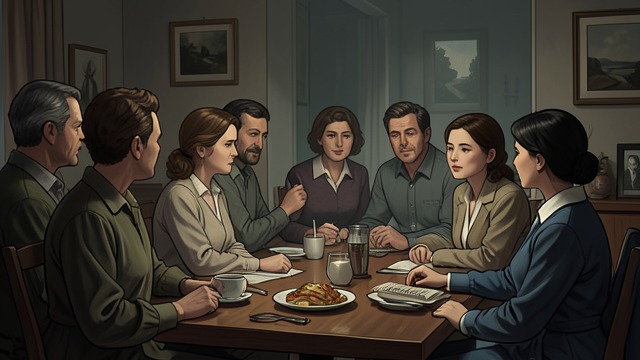
Louise attends a dinner at which friends praise her cooking, then move on to their own work and ambitions. She smiles through a conversation whose language and assumptions leave her outside it.
Invisibility within intimacy
The family’s friends know her name and depend on her food but do not encounter her as an equal social person. Her presence is welcomed so long as it remains useful and discreet.
A Daughter Made Peripheral
Stéphanie’s Unequal Place
Allowed to accompany her mother
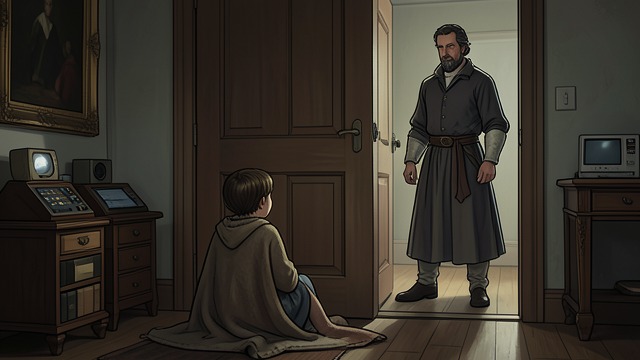
Stéphanie is present at the Rouvier house because no one has arranged another place for her. She is asked to stay quiet and not behave as if she shares the employers’ vacation.
The family boundary
Her exclusion shows that a worker’s family does not automatically share in the employer’s comfort. The child is visible enough to be managed but not accepted as a guest.
The Apartment as Home

A Private Claim
Louise stays behind
When Myriam and Paul return late, Louise sometimes sleeps on their sofa. Over time she builds a quiet presence within their apartment, a space she maintains and increasingly experiences as home.
Recognition remains conditional
The family tolerates the arrangement without naming what it means. Louise is close enough to inhabit their rooms but not secure enough to claim them openly.
A Life Beyond the Stroller

The Employer Looks Again
A glimpse of independent movement
Myriam watches Louise walking alone through a city street, no child or stroller beside her. The scene makes Louise seem like a stranger moving through a world the family has never seen.
Recognition arrives late
Myriam wonders where Louise is going and what she is like outside work. The question marks a belated recognition that the person who sustained their home had a life they had not bothered to know.
At the childcare agency
At the first dinner with friends
During the Rouvier family’s country holiday
After the Massés begin going out at night
The evening Myriam sees Louise in traffic
